Starting a dropshipping business in India is one of the most popular online business ideas among beginners and businesspeople. However, before launching a dropshipping e-commerce business in 2026, one critical question must be answered clearly:
Is a dropshipping business legal in India?
And if yes, what are the GST, tax, and compliance requirements?
This detailed dropshipping beginner guide for India (2026) explains everything you need to know legality, GST rules, income tax, Amazon and Shopify compliance, and common legal mistakes—so you can start your business confidently and correctly.
Is Dropshipping Business Legal in India in 2026?
Yes, a dropshipping business is completely legal in India in 2026, provided you follow Indian tax laws, GST regulations, and platform-specific policies (Amazon, Shopify, etc.).
There is no law in India that prohibits dropshipping. The government allows dropshipping as a legal online business in India, similar to online retail or marketplace selling.
However, legality depends on compliance, not the business model itself.
Dropshipping is legal if you:
- Register your business properly
- Follow GST rules
- Pay income tax on profits
- Sell permitted products only
- Comply with Amazon, Shopify, and consumer protection laws
If these conditions are met, dropshipping operates as a fully legal and scalable online business in India.
What Is the Dropshipping Business Model? (Simple Explanation)
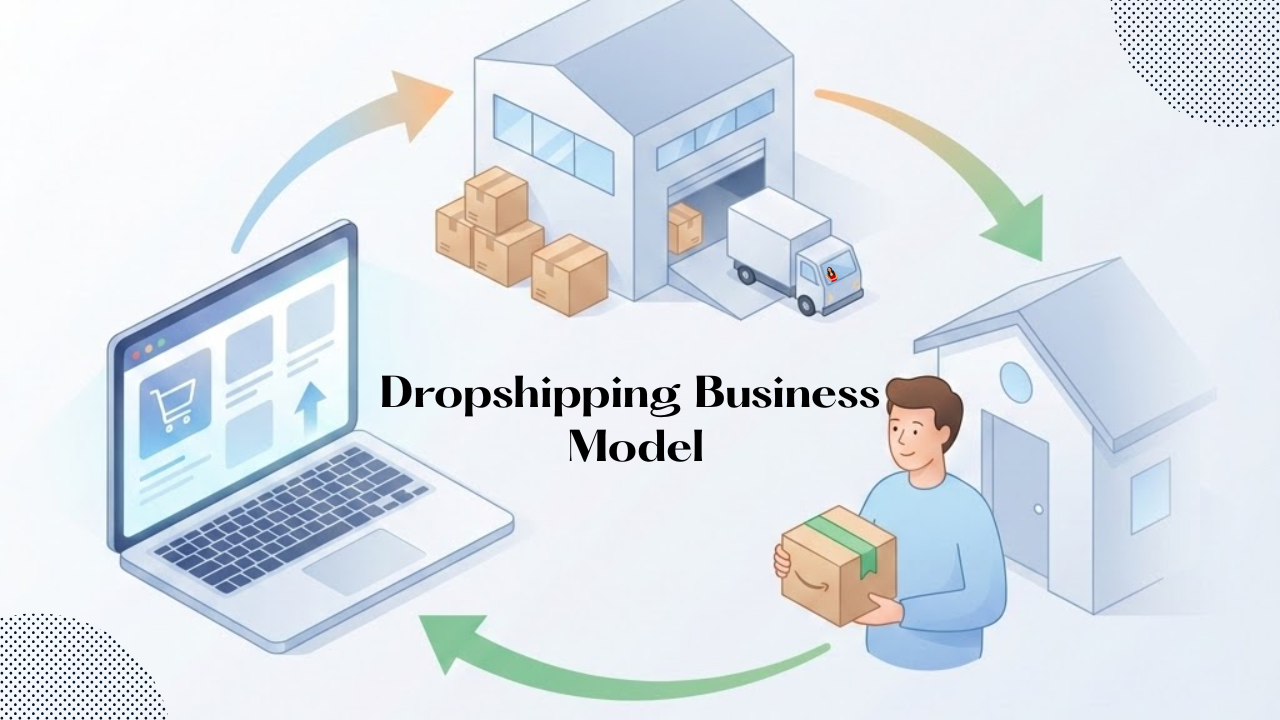
The dropshipping business model allows you to sell products online without holding inventory.
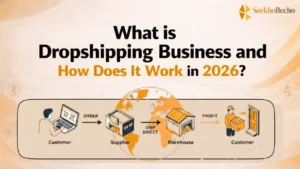
How Dropshipping Works:
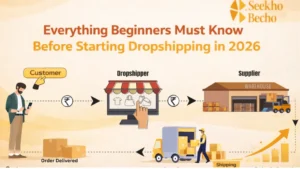
Supplier → Online Platform → Customer
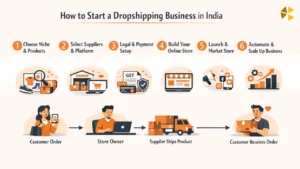
- You list products on Amazon, Shopify, or your website
- The customer places an order and pays you
- You forward the order to the supplier
- Supplier ships the product directly to the customer
- Your profit = Selling price – Supplier cost
This makes dropshipping a low-investment and beginner-friendly online business idea.
Is GST Mandatory for Dropshipping Business in India?
Yes, GST is mandatory for most dropshipping businesses, especially in 2026.
When GST Registration Is Mandatory:
|
Situation |
GST Required |
|
Selling on Amazon, Flipkart, Meesho |
Yes (Mandatory) |
|
Operating an Amazon dropshipping business |
Yes |
|
Running a Shopify dropshipping guide-based store |
Yes (in most cases) |
|
Selling across states |
Yes |
|
Annual turnover above ₹20 lakh |
Yes |
|
Acting as a marketplace seller |
Yes |
Even if your turnover is low, marketplace platforms require GST.
GST for Amazon Dropshipping Business
If you are running an Amazon dropshipping business, GST registration is non-negotiable.
Amazon GST Compliance:
- GST number required for seller account
- Monthly GST returns (GSTR-1, GSTR-3B)
- TCS (Tax Collected at Source) by Amazon
- Correct HSN codes and tax rates
Amazon reports seller data directly to the GST department, making compliance essential.
GST for Shopify Dropshipping Guide Users
For sellers following a Shopify dropshipping guide and running their own website:
GST Applicability on Shopify:
- Mandatory if selling to Indian customers
- Required for interstate sales
- Required if using Indian payment gateways
- Mandatory for Facebook/Instagram ads with GST billing
Exception:
If you sell only to international customers and receive foreign currency, GST rules may differ (export of services). Professional consultation is advised.
Income Tax Rules for Dropshipping Business in India
Apart from GST, income tax compliance is equally important.
Income Tax Basics:
- Dropshipping income is treated as business income
- Taxed as per applicable income tax slabs
- Advance tax applicable if income exceeds limits
- Maintain profit & loss records
Tax Rates Depend On:
- Individual / Proprietor tax slab
- LLP or Private Limited Company tax structure
Business Registration Options for Dropshipping
Choosing the right business structure helps with compliance and growth.
Common Registration Types:
|
Structure |
Best For |
|
Sole Proprietorship |
Beginners, small sellers |
|
LLP |
Growing businesses |
|
Private Limited |
Scaling brands, funding plans |
Sole proprietorship is the most common choice for beginners in a dropshipping e-commerce business.
Import, Export & Supplier Compliance
If you source products from outside India (China, UAE, etc.):
Key company policies:
- Import duty and customs clearance
- IEC (Import Export Code) for bulk imports
- Supplier invoices and documentation
- Compliance with banned or restricted product lists
For domestic suppliers, ensure:
- GST-compliant invoices
- Legal product sourcing
- Clear return and refund terms
Amazon vs Shopify Dropshipping: Legal & Compliance Comparison
|
Factor |
Amazon Dropshipping |
Shopify Dropshipping |
|
GST Mandatory |
Yes |
Mostly Yes |
|
Platform Control |
High |
Full Control |
|
Compliance Risk |
High |
Medium |
|
Data Ownership |
Amazon |
You |
|
Branding |
Limited |
Full |
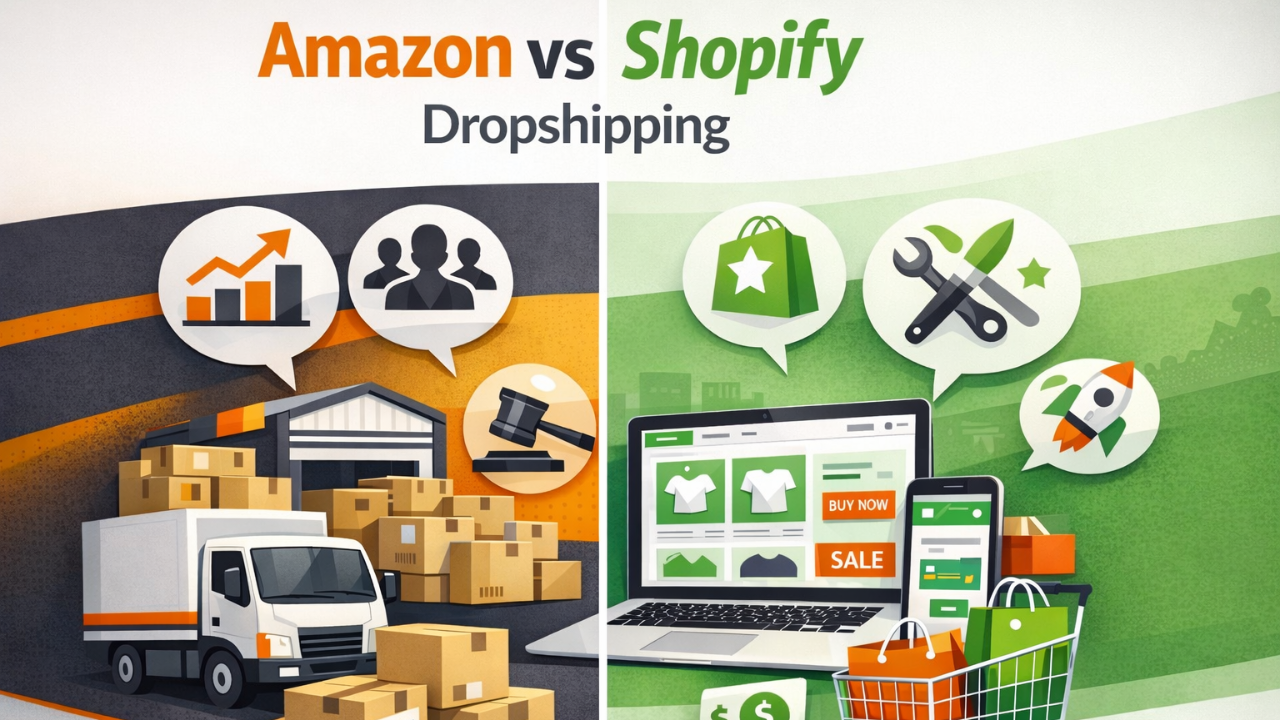
Amazon dropshipping guide users must strictly follow Amazon’s policies, while Shopify offers flexibility but requires stronger compliance discipline.
Legal Dropshipping Business Ideas in India for 2026
Here are low-risk and legal dropshipping business ideas for 2026:
- Fashion accessories
- Handbags and wallets
- Printed T-shirts
- Home décor items
- Fitness accessories
- Office supplies
- Beauty tools (non-regulated)
Avoid restricted categories like medicines, alcohol, tobacco, and counterfeit products.
Common Legal Mistakes to Avoid in Dropshipping
Many beginners face issues due to avoidable errors.
Top Mistakes:
- Selling without GST registration
- Using fake or unverified suppliers
- Ignoring Amazon and Shopify policies
- Not filing GST returns on time
- Selling banned or trademarked products
- No business registration or bank separation
Avoiding these mistakes ensures your dropshipping business model remains safe and scalable.
Start Dropshipping the Right Way in 2026
The dropshipping e-commerce business is fully legal in India, but success depends on doing it the right way with proper GST, tax compliance, and verified suppliers.
Legal clarity not only protects your business but also builds long-term trust with customers and platforms and make dropshipping profitable business in India.
Start Your Dropshipping Business with Seekhobecho
Start your dropshipping business the right way in 2026 with Seekhobecho. Get expert guidance, verified suppliers, and step-by-step support to build a legally compliant and profitable online business.
Whether you are planning an Amazon dropshipping business or following a Shopify dropshipping guide, Seekhobecho helps you launch with confidence and compliance.
FAQs: Dropshipping Business Legal in India (2026)
1. Is a dropshipping business legal in India?
Yes, dropshipping is legal in India if you follow GST, income tax, and e-commerce compliance rules.
2. Is dropshipping legal under 18 in India?
Yes, dropshipping is legal in India, but there are certain age-related restrictions. Technically, anyone can start a dropshipping business, but to open a business bank account, register for GST, or enter into legal contracts, you must be at least 18 years old. If you are under 18, you can still run a dropshipping business with parental or guardian support, who can legally register the business and handle official documentation.
3. Is GST mandatory for a dropshipping business?
Yes, GST is mandatory for Amazon dropshipping businesses and most Shopify dropshipping businesses.
4. Can I start dropshipping without company registration?
Yes, you can start as a sole proprietor, but GST and income tax compliance are still required.
5. Is Amazon dropshipping allowed in India?
Yes, but only if you follow Amazon’s dropshipping policies and Indian tax laws.
6. Which platform is safer legally: Amazon or Shopify?
Shopify offers more control, while Amazon has stricter compliance and policy enforcement.