Amazon dropshipping is not a term you can avoid today. Everyone who knows something about business, also knows about this term. But what is it exactly?
What is Amazon Dropshipping?
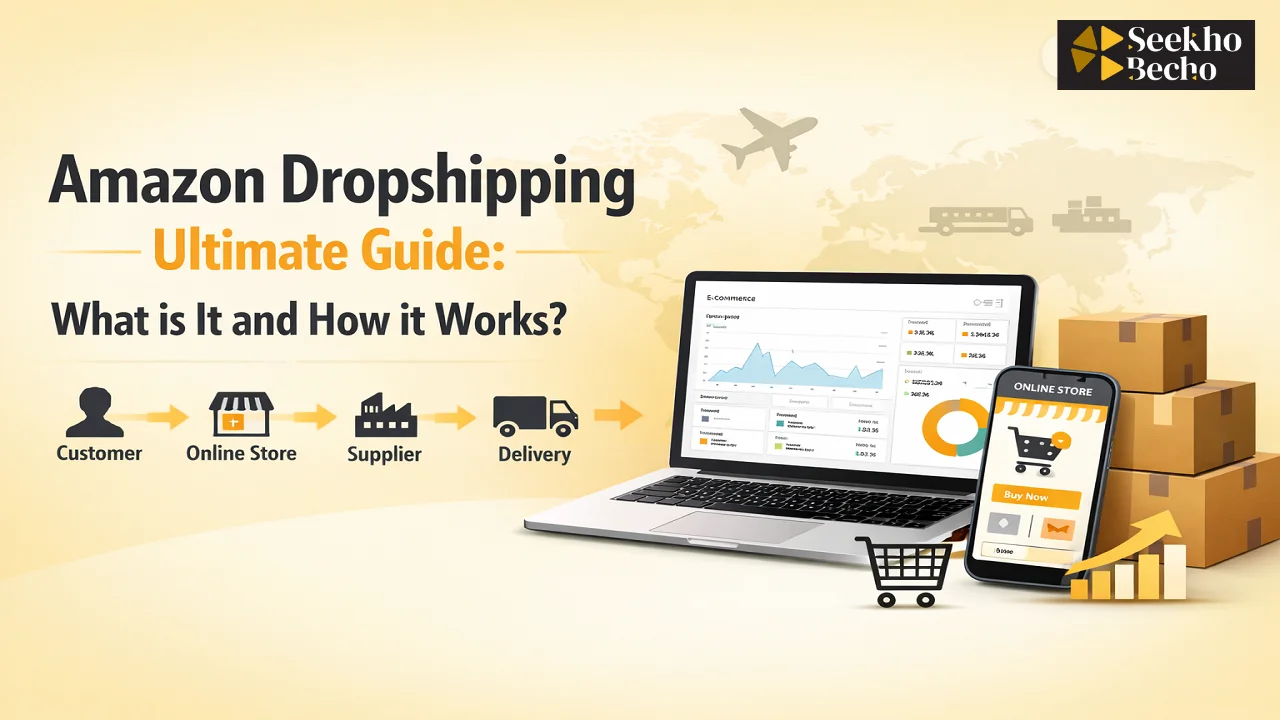
Amazon dropshipping is when someone dropships on Amazon. The dropshipper or seller creates an account on Amazon, lists the supplier’s products, and takes orders on Amazon itself. Then, they send the orders to the supplier. The supplier sends the product to the customer.
The dropshipper or seller makes profits through the price difference between what they pay the supplier, and what the customer pays them.
Amazon Dropshipper Profits = Earnings from Customer Sales – (Expenses Paid to Suppliers + Amazon Fees)
On Amazon, the dropshipping seller has to make sure that the supplier’s information does not appear on any of the packaging or invoices given to the customers.
Amazon dropshipping can be done in India and internationally. Each type of Amazon dropshipping has some particularities which make it different from the other. For example, your customers will be different, want different products, and your costs will also change.
Decided to start dropshipping on Amazon India? Get end-to-end guidance and support.
If you want to know more about Amazon dropshipping before you decide whether it’s right for you, read on.
How Does Dropshipping on Amazon Work?
Dropshipping on Amazon works with a simple process. Before you understand the details of the process, this is a quick overview of the steps.
1. Select Niche and Products: Pick profitable niches and the best selling products. This increases your chances of success despite the competition in dropshipping.
2. Make an Amazon Seller Account: Once you have decided what you want to sell, you can make an Amazon seller account. Here, you’ll have to be mindful of the legal procedures, costs, documents, etc. For instance, you need a GST number to sell on Amazon India.
3. Find a Good Supplier: After picking your products, you need to find a good supplier who has those products in stock, has good shipping times, is trustworthy, and overall ensures customer satisfaction.
4. List Products: Display the products that you want to sell on your Amazon storefront. Make sure to price them properly as per market demand, supplier costs, and customer purchasing power.
5. Optimize Your Listings: After listing your products, optimize your listings with the right keywords, visuals, and other elements. This helps customers find you. It is an ongoing process.
6. Optimize Your Amazon Account: Aside from just the listings, you have to optimize other aspects of your account too. This is also an ongoing process. Over time, you’ll get reviews and other statistics that boost your account health.
7. Do Marketing: Marketing is the most effective way to bring new customers to your Amazon storefront. For Amazon dropshipping, you must focus on marketing due to high competition. With creative strategies, you can direct a significant portion of Amazon’s customer base to your storefront.
8. Take and Forward Orders: Once customers start coming to your storefront and placing orders, you can forward the orders to your supplier for processing.
9. Supplier Handles Shipping: In dropshipping, the supplier handles shipping and fulfilment of the order.
10. Provide Customer Support: Customer support is one of your key responsibilities as a dropshipper, aside from marketing.
To know how dropshipping works in general, read our simple explainer with the latest information for 2026.
Pros and Cons of Amazon Dropshipping
Amazon dropshipping is a great way to start an e-commerce business as a beginner, but it has some advantages and disadvantages like anything else. Awareness is important if you want to have a successful business of your own.
Pros of Amazon Dropshipping
1. Access to a huge marketplace with a consistent and loyal user base that you can convert into your customers.
2. Easier to start on an established e-commerce platform as a beginner dropshipping business.
3. Policies and systems are in place to help you keep your account and store safe, so you can keep selling.
4. Get sales and make profits without the need to hold any inventory. Find reliable suppliers and only focus on growing your business.
5. No need to handle shipping as you can choose Self Ship but leave the fulfilment process to your supplier.
6. Minimal risk in dropshipping, because there is no risk of unsold inventory and other issues related to stock and shipping.
Cons of Amazon Dropshipping
1. There is a lot of competition as there are many top sellers on Amazon, dropshippers or otherwise, who want to make use of Amazon’s vast user base.
2. You have to pay Amazon fees for your seller account, sales, or both.
3. The Amazon compliance policies can get hard to understand, especially for beginners.
4. You cannot brand your storefront much, since it is going to be on Amazon.
| Advantages | Disadvantages |
| 1. Lots of users | 1. Lots of competition |
| 2. Easier for beginners to start | 2. You need to pay Amazon fees |
| 3. Policies and systems to protect your account | 3. Compliance policies can be hard to understand |
| 4. Zero inventory or stock-related concerns | 4. Cannot customize storefront a lot as per brand |
| 5. No need to handle shipping | |
| 6. Little to no risk |
Amazon Dropshipping Policy (Must Read Before You Start)
Dropshipping on Amazon is legal, but you need to know the Amazon dropshipping policy properly before you start. Some essentials are:
1. Seller of Record: You have to be the seller of record to dropship on Amazon. This means that only your business and contact information appears on the packaging and invoices.
2. Packaging and Invoices: The supplier’s branding or information should not appear in the packaging or invoices.
3. Supplier Clarity: The supplier must agree that you are the only seller from the perspective of the customers.
4. Return or Exchange: If or when customers put in return requests, you have to accept and process them. The customer should only contact you and not the supplier.
5. Prohibited: You cannot buy products from another online retailer, be it on Amazon or another e-commerce platform, and ask them to ship the products directly to the customer. A retailer is someone who directly sells products to the final consumer.
6. Consequences: If you do not ensure these things, your account can get suspended. The health of your account heavily depends on your compliance with the platform’s guidelines.
Compliance policies can feel tricky. We are here to help set up your seller account, guide you through the policies, and make you ready to start selling today.
Is Amazon Dropshipping Profitable in 2026?
Yes, Amazon dropshipping is profitable in 2026. There are some ways in which you can increase your chances of being profitable on Amazon.
1. Choose the Right Products: You have to select the best selling Amazon products to make profits. You also have to crosscheck these with items that are most profitable in dropshipping. Compare these two lists and highlight the items that you see in both. These will be your options to choose from. Another thing to consider when choosing Amazon dropshipping products is that your marketing efforts towards that product and niche
2. Pick Reliable Suppliers: Select suppliers who will have the items in stock whenever needed, have good shipping times and maintain high-quality products. The supplier is one of the key elements of your dropshipping business.
3. Select the Right Marketplace: Evaluate your strengths and weaknesses and choose either Amazon India or Amazon international. If you choose Amazon international, you have to select the right marketplace for your business. This means that you have to research multiple marketplaces and their consumers in order to decide.
4. Understand your Competition: Amazon has a great customer base, but also has a lot of competition when it comes to sellers. You don’t just have to compete with other dropshippers, but also with sellers following other business models such as traditional e-commerce. It is best to know and understand your competitors in order to learn from their strengths and weaknesses.
5. Understand the Platform: For Amazon dropshipping, you don’t just have to understand dropshipping but also the ins and outs of Amazon as a platform. You have to gather information from a seller’s perspective and a consumer’s perspective in order to have a successful business. Some tactics or products that work well on other platforms, may not work on Amazon due to its particularities.
Amazon Dropshipping India vs International Markets
You can either choose to sell on Amazon India, or go for global selling. Each has its own benefits and drawbacks, and you have to choose what is right for your business ultimately.
| Amazon India Dropshipping | Amazon International Dropshipping |
| 1. Sell all over India | 1. Sell in your choice of international market |
| 2. GST number compulsory | 2. GST number not needed but tax interview compulsory |
| 3. Lots of customers but comparatively less scope for expansion | 3. Many customers and lots of scope for expansion |
| 4. Products as per demand in particular state or states | 4. Products as per demand in that country, might require more research and variety |
| 5. Payment gateways as per India | 5. Foreign payment setup required |
| 6. Do not need to worry about export | 6. Export legalities to be considered |
| 7. Might take less time to ship if supplier is in India | 8. Might take more time to ship, especially if supplier is in India |
Amazon Dropshipping Costs for Sellers
With minimum costs, you can start dropshipping on Amazon. But it is a good idea to know what the costs are, in order to start your business smoothly and without excessive hassles. We have a simple explanation of the details of Amazon India and Amazon international dropshipping fees, but below is a one-glance summary of the same.
Amazon India Seller Fees
The fees that sellers on Amazon India have to pay are:
- Referral Fee: Percentage of every sale. Free for many products priced under ₹300.
- Closing Fee: Flat amount dependent on selling price.
- Weight Handling Fee: Shipping fee, only if you choose Fulfillment by Amazon (FBA).
- Other Fees: Such as those related to using Amazon fulfilment centres (FCs).
No monthly subscription fee is needed for Amazon India dropshippers and sellers.
Amazon International Seller Fees
The fees that Amazon international sellers have to pay are:
- Subscription Fee: Professional plan needed, has a monthly fee.
- Referral Fee: Percentage of every sale.
- Fulfillment Fees: Only if you choose FBA.
- Other Fees: Such as those related to currency conversion and import duties.
How to Start Amazon Dropshipping Step by Step
The detailed procedure of how to start Amazon dropshipping has been explained properly below.
Step 1 – Choose a Marketplace
Decide whether you want to sell on Amazon India or Amazon International. Once you have chosen your marketplace, research it so that you can find out how to sell and make profits with your target customers.
Step 2 – Find Products and Suppliers
Find profitable products as per your chosen marketplace and niche. Also, select a good and reliable supplier who has those products. Their shipping should be fast, efficient, and good quality.
Step 3 – Create Amazon Seller Account
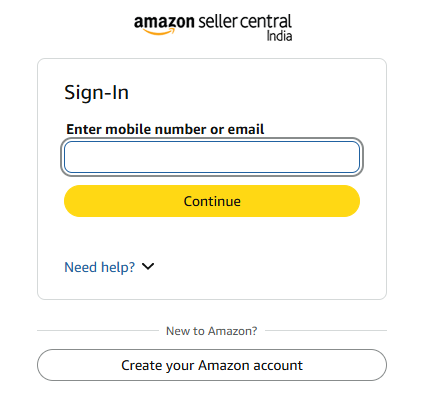
Now create an Amazon seller account by registering as an Amazon seller. If you have an existing Amazon account, you can use those credentials to sign in. If not, create a new Amazon account.
Amazon India Seller Account Steps
A) Enter Your GST Number
After signing in, enter your GST number. This is compulsory for Amazon India. After entering the number, click on Continue to Verify.
B) Upload Your GST Document
To verify your GST number, you have to upload your GST document in pdf, doc or jpg format. The size should be under 100 MB.
C) Verification
Once you have uploaded your GST document, Amazon will verify it. It can take up to 72 hours for verification to be completed. Once it’s done, you’ll receive an email notifying you. But you do not have to wait for this in order to continue registering.
D) Choose a Name for Your Store
Come up with a unique, catchy name for your Amazon storefront. Amazon suggests some names, but you can also write your own.
E) Put in Your Pickup Address
Now put your pickup address into the next field. This is the address from where your parcels will get picked up for delivery. As a dropshipper, you can enter your supplier’s address, but for Amazon India you have to ensure this address is in the same state as the GST registration.
F) Select Method of Shipping
You can either choose Easy Ship or Self Ship. In Easy Ship, your supplier stores and packs the orders but Amazon ships them. In Self Ship, your supplier stores, packs and ships the orders. They may use third-party courier service providers.
G) Shipping Fee Structure
This only applies if you’re choosing shipping through Amazon. If you pay the shipping fee yourself, your customers get free delivery but the product price needs to increase to account for shipping. If you choose to charge your customers the delivery fee, you can lower the price of products.
H) Enter Your Bank Account Details
Put in your business bank account details. The money from your sales will reach this account.
I) Default GST Rate or Product Tax Code (PTC)
There is a different GST slab for various product categories. You have to check your product categories and select the GST rate or Product Tax Code (PTC) accordingly.
J) List and Sell Products
Your registration is now done. Click on “Add products and start selling” to make your listings and get started with your business.
Amazon International Seller Account Steps
A) Go to Amazon Global Selling
Go to the Amazon Seller Central, click on ‘Sign Up’, and then pick ‘Sell Globally’.
B) Select Account Type
Now, you have to select the account type. Choose ‘Professional Seller Account’. It is best to choose this because it has more features and all product categories. You will be charged a monthly fee, which will depend on the marketplace you sell in.
C) Enter Business Details
Next, it’s time to enter your business details such as legal business name (which has to match PAN), your business address, and contact details.
D) Identity Verification
Verify your identity by uploading PAN and address proof. Further, there is a live video verification that might be scheduled by Amazon. In this case, your face must match your ID picture.
E) Bank Account Setup
After this, you have to set up your business bank account, and a foreign payment platform that will allow you to do transactions internationally.
F) Tax Interview
You’ll have an important tax interview where you’ll be asked whether you’re a US citizen, whether you have a permanent establishment in the US, and more. If you’re not a US citizen, you’ll have to choose the W-8BEN tax form, which certifies your foreign seller status and reduces your taxes. You’ll get an auto-generated tax form through Amazon.
G) Marketplace Selection
Now, choose the Amazon marketplace where you want to sell your dropshipping products. You can choose Amazon US, UK, Canada and many more marketplaces.
H) Approval
After you complete all the steps and get your seller account approved, you will get to see and use your Seller Central Dashboard.
Step 4 – Make Your Product Listings
Once your seller account is up and running, you can pick the products from the supplier you had previously thought of, and start making listings. You have to choose nice titles, descriptions and good images so that the listings are customer-friendly and more likely to bring sales.
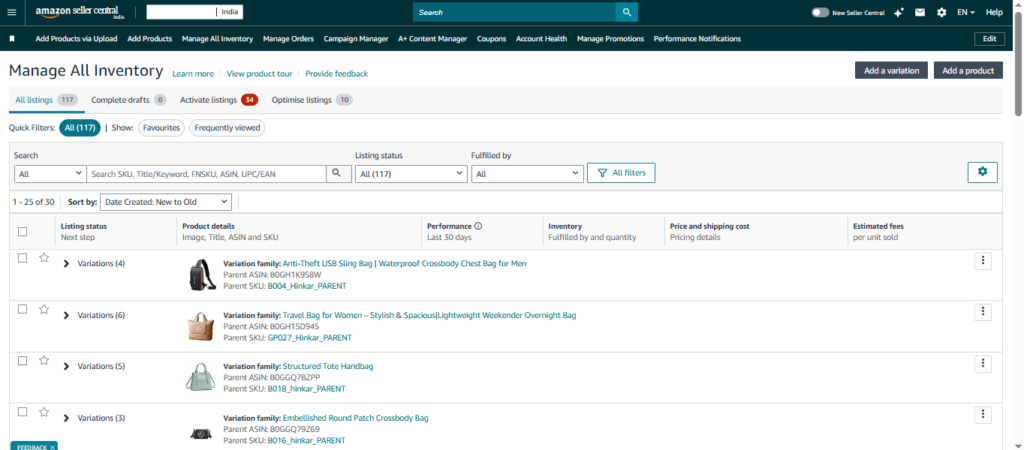
Optimize your listings by using the right keywords that your target customers are searching for. Price your products as per market trends and customer base. Work on your storefront as this is what your customers will see, and it will greatly influence their decision of whether to buy or not. Also keep your seller account up to shape so that there is no risk of suspension.
Step 5 – Start Marketing
In order to make people aware of your storefront, you have to use creative marketing methods. Utilize social media and other online forums to promote your dropshipping business, making it clear that you are providing great products at the best prices. Display your people skills so that customers find you trustworthy and likeable. Use creative techniques to grab their attention and make them visit your Amazon storefront.
Step 6 – Start Taking Orders
Once your customers reach your storefront and see your listings, they will start placing orders. You will have to forward these orders to the supplier, who will handle shipping.
Step 7 – Ensure Fulfilment Happens
You’ll have to stay updated on the shipping and fulfilment process and make sure that the product reaches the customer. While you are not responsible for shipping, it is important that you stay aware of the progress of orders. You can use your seller dashboard to keep track of these things.
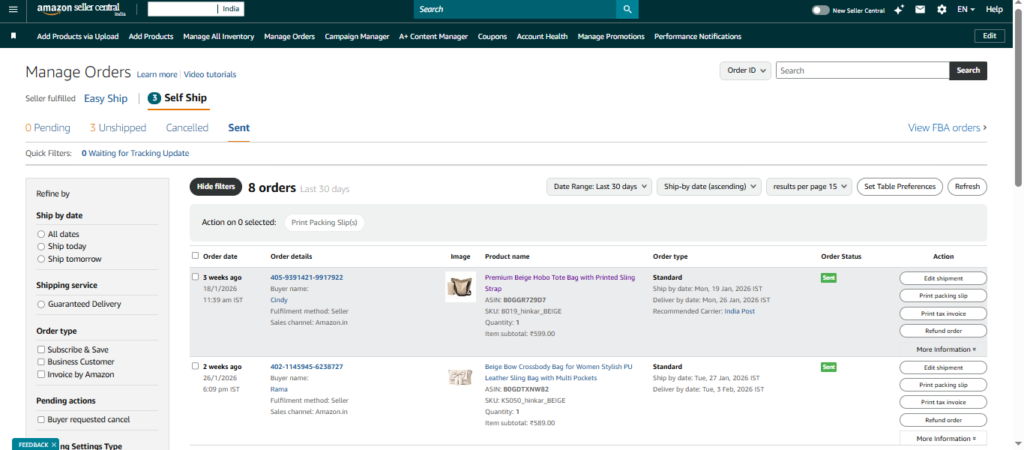
The customer only sees your storefront and interacts with you, not the supplier. Any product or shipping issues on the supplier’s side may look like your shortcomings to the customer, which is why it is good to stay on top of things at all times.
Step 8 – Manage Customer Support
As the customer only sees your storefront, branding and business rather than the supplier’s (this is one of the key rules of Amazon dropshipping), you are also responsible for communicating with the customer and providing customer support. If they have any queries or problems regarding the orders, you will have to make sure they are resolved.
Step 9 – Receive Return and Exchange Requests
Another rule of Amazon dropshipping is that you have to be the one to receive return and exchange requests from the customer. They should not be asked to send these requests directly to the supplier. Therefore, you have to receive and forward these requests as well.
So these are the detailed steps of Amazon dropshipping. Feeling ready to start your business? Reach out to us today.
How to Dropship on Amazon the Right Way
Now you know the process of Amazon dropshipping, but there are also some proven tips that every successful dropshipper follows on the platform.
Daily Operations Checklist
Maintain a daily checklist of operations that you have to complete. If you stay organized, it helps you run your business in a more efficient way.
Inventory Syncing
Since your inventory is not on Amazon itself if you’re a dropshipper, you’ll need to manage inventory syncing as per availability. A dropshipping platform syncs your inventory and adds more products when needed, without you having to worry.
Price Monitoring
Monitor the price of products similar to yours on the platform, or within the same niche. You might have to adjust your pricing based on market changes, demand fluctuations, and more factors. Especially in the beginning, keep yourself flexible as a business.
Order Automation
You can automate your orders so that you do not need to make any manual effort in your dropshipping business. A dropshipping platform will take care of your order flow on your behalf.
How to Find Suppliers for Amazon Dropshipping
We have mentioned that it is important to choose good suppliers in order to have profitable dropshipping business ideas, but where does one find suppliers?
1. Dropshipping Services: The safest and best method of finding dropshipping suppliers is to work with a dropshipping platform. Their services usually include connecting you with a good supplier for your business.
2. Manufacturers: Some manufacturers double as dropshipping suppliers. So, once you have chosen your products, you can find some good manufacturers in your marketplace and contact them to find out more. Make sure to ask all pertinent questions before signing an agreement.
3. Business Community: Join forums and groups online where dropshipping businesses often discuss their suppliers, business challenges, and other important topics you might benefit from. It is very likely that you will find out about good suppliers from other dropshippers.
4. Directories: There are many online directories specifically for dropshipping. You can find your supplier in these directories as well. However, it might be harder to understand the product quality or get a lot of one-on-one conversation with these suppliers.
5. Marketplace: Amazon has good dropshipping suppliers as well, who are located in different parts of the world. However, here you will have to be careful because your supplier cannot be a retailer (someone who also directly sells to the end-customer).
Product Research Strategies for Amazon Dropshipping
We’ve also mentioned many times that you need to find best-selling products for your dropshipping business on Amazon. But you also need to find products and best dropshipping niches that do not have more competition than you can handle. How does one do this?
1. Keyword Research: Find what keywords are trending using keyword research tools like Semrush. If you find out the words that your customers are typing in their frequent searches, you can accordingly select products in high demand. Since your business is also online, it is helpful to see what people want to find online through keyword research.
2. Understand Amazon: Check what products sell the most on Amazon. Further, do more research on the platform to figure out the selling strategies that perform the best, and that you can adopt as well. It is also a good idea to learn about the most successful Amazon sellers so you can look into their products and strategies.
3. Competition Analysis: It is not enough to just research the most successful Amazon sellers, but also sellers at your business level. First, find out how much competition there is. How many sellers are selling the same product, or similar ones? How successful are they? This can give you a good idea of whether the product is worth selling or not.
4. Red Flags to Avoid: Avoid dropshipping products which have a short shelf life or require a high level of specialized quality or authenticity, such as medicines or health supplements. Dropship products that are not just likely to sell online, but likely to be sold without any potential issues in the future.
Amazon FBA vs Dropshipping: Pros and Cons
Selling on Amazon can be done in other ways too, aside from just dropshipping. Another popular selling method is called Fulfillment by Amazon (FBA). You might keep hearing this term on your journey to become an Amazon seller. It is important to know what it means and how it is different from dropshipping, so you can choose what sounds the best for your business needs.
| Amazon FBA | Amazon Dropshipping |
| 1. How it Works: You’re a regular retailer, and buy your products from a wholesaler or manufacturer. Then, you send these products to Amazon’s fulfillment centres (FCs). Amazon stores them, and packs and ships them once orders come in. | 1. How it Works: You’re a dropshipper, and you sign an agreement with a supplier. You display their products and once sales come in, the supplier directly ships the product to the customer without showing their name or branding on the parcels or invoices. |
| 2. Customer Service: Amazon handles customer service at first. | 2. Customer Service: You handle all customer service throughout. |
| 3. Buying: You buy the product from the manufacturer or wholesaler in large quantities. | 3. Cost: You pay for the product once your customer places an order for it, reducing starting costs significantly. |
| 4. Amazon Fees: You have to pay shipping and other FBA fees. | 4. Amazon Fees: You do not have to pay shipping and other FBA fees. |
| 5. Returns: Amazon takes care of returns. | 5. Returns: You receive return requests and they are processed by the supplier. |
| 6. Unsold Stock Risk: There is a risk of unsold stock. | 7. No Unsold Stock Risk: There is no risk of unsold stock since sellers does not have inventory. |
Which Model Is Better for You?
Ultimately, the model that is better for you depends on what your priorities are as a business. If you want more control over your products and branding, FBA might be the way to go. If it is quick business growth you are seeking, dropshipping is the best idea. Weigh the pros and cons of both options and see what is right for you and your business.
Amazon Dropshipping vs Ecommerce Website Dropshipping
With dropshipping, you can either choose to sell on an established e-commerce platform like Amazon or build your own ecommerce website. What should you choose?
| Amazon Dropshipping | Ecommerce Website Dropshipping |
| 1. Established customer base and users on the platform | 1. Have to make customers aware of your website and bring them there |
| 2. Lots of competition on the platform | 2. Unique domain that is only yours |
| 3. Limited customization options for branding needs | 3. Completely customizable website as per brand |
| 4. Fees deducted by Amazon | 4. Earnings are fully yours |
| 5. Compliance policies to be followed | 5. No compliance policies, just legalities |
| 6. Low starting costs, marketing is the main investment | 6. Need to invest time and money into website development and marketing |
Common Mistakes Beginners Make in Amazon Dropshipping
1. Choosing High-Competition Products: If you choose products which already have a lot of sellers to the point that the market is saturated with options, it is less likely that you will make profits quickly. To choose such products, you have to really know how to market your business such that people choose you over all the other available options. Before selecting a product, you must check what is the most expensive thing on Amazon.
2. Using Unreliable Suppliers: As mentioned, the quality of your suppliers determines the quality of your dropshipping business to a great extent. If you use unreliable suppliers, the products might not be of good quality or the fulfilment process might not be proper. In either case, it will not make a good impression on your customers as they will believe that the problem has been caused by your business. The double-edged sword of dropshipping is that the customer only sees your business, not the supplier.
3. Ignoring Amazon Policy: Ignoring Amazon’s compliance policy is a big blunder because it can get your account suspended. To get the advantage of accessing Amazon’s huge customer base, you have to abide by these policies.
4. Competing Only on Price: Competition is not just about pricing. Of course, your pricing has to be proper as per your competitors, to increase the chances of customers choosing you. But you also have to compete with the quality of products, good fulfillment process, great customer support, user-friendly storefront creation, and much more. If you forget these things, it is likely that the customer will forget you too!
How to Scale an Amazon Dropshipping Business
After knowing everything about how to get started with an Amazon dropshipping business, it is also crucial to know how to scale it. Once your business is ready and making sales, you also need to start growing so that you keep making profits.
1. Expand Product Catalog: Increase the number and variety of products you are dropshipping. This can be done once your business is in good shape and the only thing holding it back is a lack of variety. The more you keep adding new products, the more your customers will keep increasing and returning.
2. Automate Operations: Reduce your time investment and effort by automating your order flow and other operations, or working with dropshipping experts who will handle these tasks for you. Spend more time on strategizing and earning, while the rest keeps happening without constant intervention.
3. Networking with Suppliers and Other Sellers: Build business relationships with suppliers and other Amazon sellers in order to keep up to date with the latest happenings in dropshipping.
Is Amazon Dropshipping Worth It in 2026?
Yes, Amazon dropshipping is still worth it in 2026 but only for those who know how to use the advantages to their power, and take measures to avoid or work around the disadvantages.
Why You Should Start Amazon Dropshipping
You should start dropshipping on Amazon if:
1. You know how to do better than the competition.
2. You are confident in your marketing skills, or have the budget to buy marketing services.
3. You like talking to people and do not mind handling customer support.
4. You understand or are keen to understand how Amazon works, what sells more, and more details.
5. You are quick to adapt to changes in the market, customer behavior, etc.
6. You are a beginner who wants to start on an established marketplace instead of launching your own store.
Why You Should Not Start Amazon Dropshipping
You should not start dropshipping on Amazon if:
1. You are not ready to deal with competition.
2. You are not keen on research or understanding the platform.
3. You would prefer to have your own online store.
4. You do not understand compliance policies or don’t have guidance on them.
Conclusion
Amazon dropshipping is a great way for you to create an online business where you do not have to hold any stock or manage shipping, and where you get access to an established customer base on a trusted e-commerce platform. But Amazon dropshipping is only for those who are ready for business growth and willing to learn about the platform before getting started.
From learning to earning, SeekhoBecho is your dropshipping partner.
Frequently Asked Questions
1. Can you dropship on Amazon?
Yes, you can dropship on Amazon if you follow its compliance policies and guidelines. Amazon dropshipping is a popular and profitable way to do online business.
2. Is Amazon dropshipping legal?
Yes, Amazon dropshipping is completely legal. You have to make sure that the dropshipping supplier’s information does not appear on any of the packaging or invoices. In other words, you have to be the seller of record. There are some other compliance guidelines you have to maintain in order to dropship on Amazon.
3. Is Amazon to Amazon dropshipping allowed?
Amazon to Amazon dropshipping is allowed if you find a supplier on Amazon. It is not allowed if your supplier is also a retailer, that is, also sells products to the end-consumer.
4. Can I dropship without a GST number in India?
No, you cannot dropship without a GST number in India. It is one of the compulsory requirements for all sellers on Amazon India.
5. How much money do I need to start Amazon dropshipping?
You need very little money to start Amazon dropshipping. You just need to allocate funds for your monthly subscription if you choose a professional seller account. Otherwise, Amazon only deducts fees once sales happen. To further minimize starting costs, find a supplier who does not charge you until the customer places an order.
6. Is dropshipping with Amazon profitable?
Yes, dropshipping with Amazon is profitable for those who know how to comply with legalities and platform policies, research the market, find the most sold items on Amazon, choose a good supplier, make optimized listings, and be better than the competition.
7. Can beginners succeed with Amazon dropshipping?
Yes, beginners can succeed with Amazon dropshipping. It is one of the best dropshipping platforms for beginners because of its huge customer base, established selling systems, and seller-friendly features.
8. Is Amazon a dropshipping company?
No, Amazon is not a dropshipping company specifically. It is an e-commerce company that provides a platform for both buyers and seller. However, Amazon allows dropshipping as a business model for sellers, if they comply with Amazon’s dropshipping policy.
9. How do I become an Amazon dropshipper?
You can become an Amazon dropshipper by selecting your products and supplier, making a seller account, listing your products, finishing the formalities of the platform, optimizing your listings, and taking customer orders which you can then forward to the supplier for fulfilment as you handle customer support.
10. What are the risks of Amazon dropshipping?
There is little to no risk in dropshipping generally, and Amazon dropshipping is particularly safe because it is a trusted platform with proper compliance rules in place. There are a lot of verification steps for buyers and suppliers, making it risk-free. The only risk is that if your supplier faces any issues or is unable to fulfil orders properly, the customer would see this as an issue with your business since you are the only party interacting with them.