The Ecommerce Business Models is evolving at breakneck speed. By 2026, the market is no longer just about buying and reselling generic items; it is about brand storytelling, niche dominance, and smart logistics.
Gone are the days when “ecommerce” meant only one thing. Today, multiple business models operate online, each with a distinct risk profile, capital requirement, and profit structure. Whether you are a student with ₹10,000 or an investor with ₹10 Lakhs, there is a model tailored to your capacity.
Top 5 Profitable Ecommerce Business Models to Start in India
1. Dropshipping Business Model (The Low-Risk Entry)
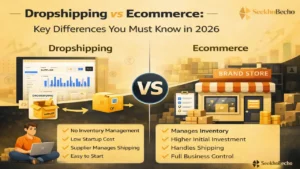
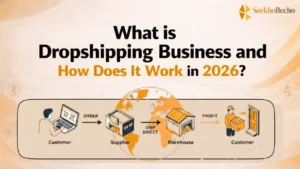
Dropshipping remains the most accessible gateway into ecommerce business models. In this, you act as the bridge between the supplier and the customer. You sell first and buy later. The dropshipping business model offers some of the best dropshipping business guide for beginners by allowing you to sell products online without holding inventory. You only purchase items from suppliers after receiving customer orders, which keeps startup costs low. With the right product selection and marketing strategy, dropshipping business ideas can be easily scaled into profitable online ventures.
- Best for: Beginners, Students, Digital Marketers.
- Capital Required: Low (₹15,000 – ₹50,000).
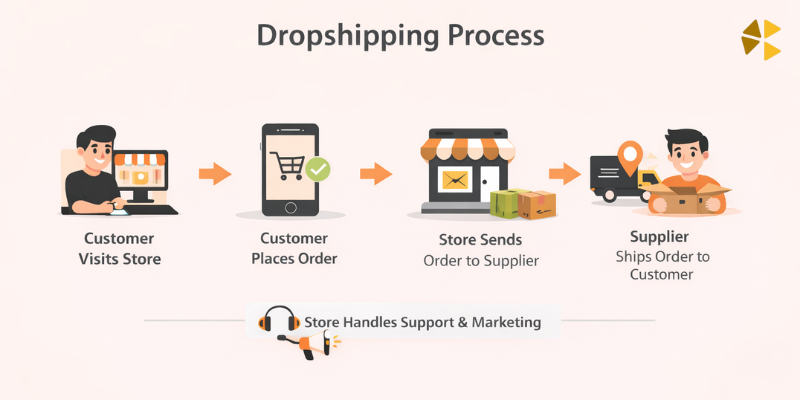
How It Works:
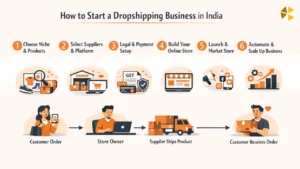
- You list a product on your store (e.g., Shopify or Woocommerce).
- A customer places an order and pays you.
- You forward the order to a third-party supplier (often using automation tools).
- The supplier ships the item directly to the customer.
Why Start This in 2026?
- Zero Inventory Risk: You never worry about dead stock or unsold inventory.
- Scalability: You can test 10 different products in a week. If a product doesn’t sell, you simply remove it and try another.
- Location Independence: Run your business from anywhere with a laptop and internet.
Pro Tip: In 2026, successful dropshippers in India aren’t just selling “products”; they are creating “content.” Use Instagram Reels and Shorts to drive organic traffic.
2. Private Label Ecommerce (The Brand Builder)
- Best for: Visionaries, Brand Builders, D2C Founders.
- Capital Required: Medium to High (₹1 Lakh+).
This is the era of the D2C (Direct-to-Consumer) revolution in ecommerce business models. Private labeling involves finding a generic product that is already selling well, improving it, and putting your own brand logo and packaging on it.
How It Works:
You work directly with manufacturers to create a unique version of a product. You control the branding, the unboxing experience, and the quality.
Why Start This in 2026?
- Asset Creation: You are building a sellable asset. A brand has value; a dropshipping store often does not.
- Higher Margins: Since you buy in bulk and brand it yourself, you command a premium price.
- Customer Loyalty: People return to buy from brands they trust, increasing your Customer Lifetime Value (LTV).
3. Print on Demand (POD) Business (The Creative Route)
- Best for: Graphic Designers, Artists, Influencers.
- Capital Required: Low.
If you have a creative flair but hate logistics, Print on Demand is your answer for profitable ecommerce business models. It is essentially dropshipping, but for custom-designed products like t-shirts, mugs, phone cases, and diaries.
How It Works:
You upload your designs to a POD platform. When a customer buys a t-shirt with your design, the printing partner prints it, packs it, and ships it. You pay for the base product only after the sale is made.
Why Start This in 2026?
- No Stock Holding: No piles of unsold t-shirts in your garage.
- Hyper-Personalization: In 2026, customers crave unique, personalized items that express their identity.
- Automated Fulfillment: Focus 100% on design and marketing; let the partner handle the ink and shipping.
4. Digital Product Ecommerce (The High Margin King)
- Best for: Educators, Consultants, Coaches, Experts.
- Capital Required: Very Low (Time & Skill Investment).
The “Knowledge Economy” in India is booming. Selling digital products like eBooks, video courses, templates, or software removes the biggest headache of ecommerce: logistics.
How It Works:
You create a digital asset once (e.g., a “Stock Market Trading Course” or “Lightroom Presets”) and sell it infinitely.
Why Start This in 2026?
- 100% Profit Margins: Once the product is made, every sale is pure profit.
- Instant Delivery: No shipping delays, no courier returns (RTO), and no damaged goods.
- Global Reach: You can sell to a customer in New York just as easily as to one in Mumbai
5. Wholesale Ecommerce (The Volume Game)
- Best for: Capital-backed Founders, Experienced Retailers.
- Capital Required: High.
This is the traditional B2B ecommerce business models moved online. You buy goods in massive bulk from manufacturers at rock-bottom prices and sell them to other retailers or consumers.
How It Works:
You act as the distributor. You require warehouse space (or use Amazon FBA) to manage heavy inventory loads.
Why Start This in 2026?
- Consistent Cash Flow: B2B orders are usually large and recurring.
- Controlled Margins: While margins per unit might be lower, the volume makes up for it.
- Supply Chain Control: You are less dependent on third-party delays since you hold the stock.
Summary: Choosing the Right Model
Not sure which path to take? Use this decision matrix to align with your current situation.
|
Metric |
Dropshipping |
Private Label |
Print on Demand |
Digital Products |
Wholesale |
|
Startup Cost |
Low |
High |
Low |
Low |
Very High |
|
Risk Level |
Low |
Medium |
Low |
Very Low |
High |
|
Time to Launch |
Fast (Days) |
Slow (Months) |
Fast (Days) |
Medium (Weeks) |
Slow (Months) |
|
Profit Margin |
15-20% |
30-50% |
20-25% |
90-100% |
10-20% |
|
Ideal for |
Beginners |
Brand Builders |
Artists |
Experts |
Investors |
Scaling Strategy for Ecommerce Business Models 2026
To succeed in the competitive Indian market of 2026, you cannot rely on old tactics.
- Multi-Channel Selling: Don’t just rely on your website. Dropshipp on Amazon, Flipkart, Instagram Shop, and WhatsApp.
- Brand Ownership: Even dropshippers must eventually transition to private labels to survive long-term.
- Retention over Acquisition: Ad costs are rising. It is cheaper to keep an existing customer than to find a new one. Focus on email marketing and loyalty programs.
Legal & Payment Considerations
Building a legitimate business is crucial for longevity.
- GST Registration: In India, GST is mandatory for selling online across states. It builds credibility with suppliers and customers.
- Payment Gateways: Ensure your store offers UPI, Wallets, and COD options. Compliant refund and shipping policies are required to get approved by top gateways like Razorpay or Cashfree.
- Trust Signals: Indian customers are value-conscious. Visible contact details, clear return policies, and trust badges improve checkout success rates.
Final Decision Framework
- Choose Dropshipping if you want speed and have a low budget.
- Choose Private Label if you want to build a real asset and sell the company later.
- Choose Digital Products if you have specialized knowledge to share.
- Choose Print on Demand if you are a creator with a design audience.
Conclusion
India’s eCommerce landscape in 2026 offers massive opportunities for entrepreneurs who choose the right business model. Whether it’s dropshipping business, private labeling, D2C brands, or marketplace selling, success depends on low entry barriers, scalability, and smart digital marketing. By starting with a ecommerce business models that matches your budget, skills, and long-term goals, you can build a sustainable and profitable eCommerce business in India’s fast-growing online market.
The best time to start was yesterday. The second best time is now. Choose your ecommerce business models, commit to the process, and start building your empire.