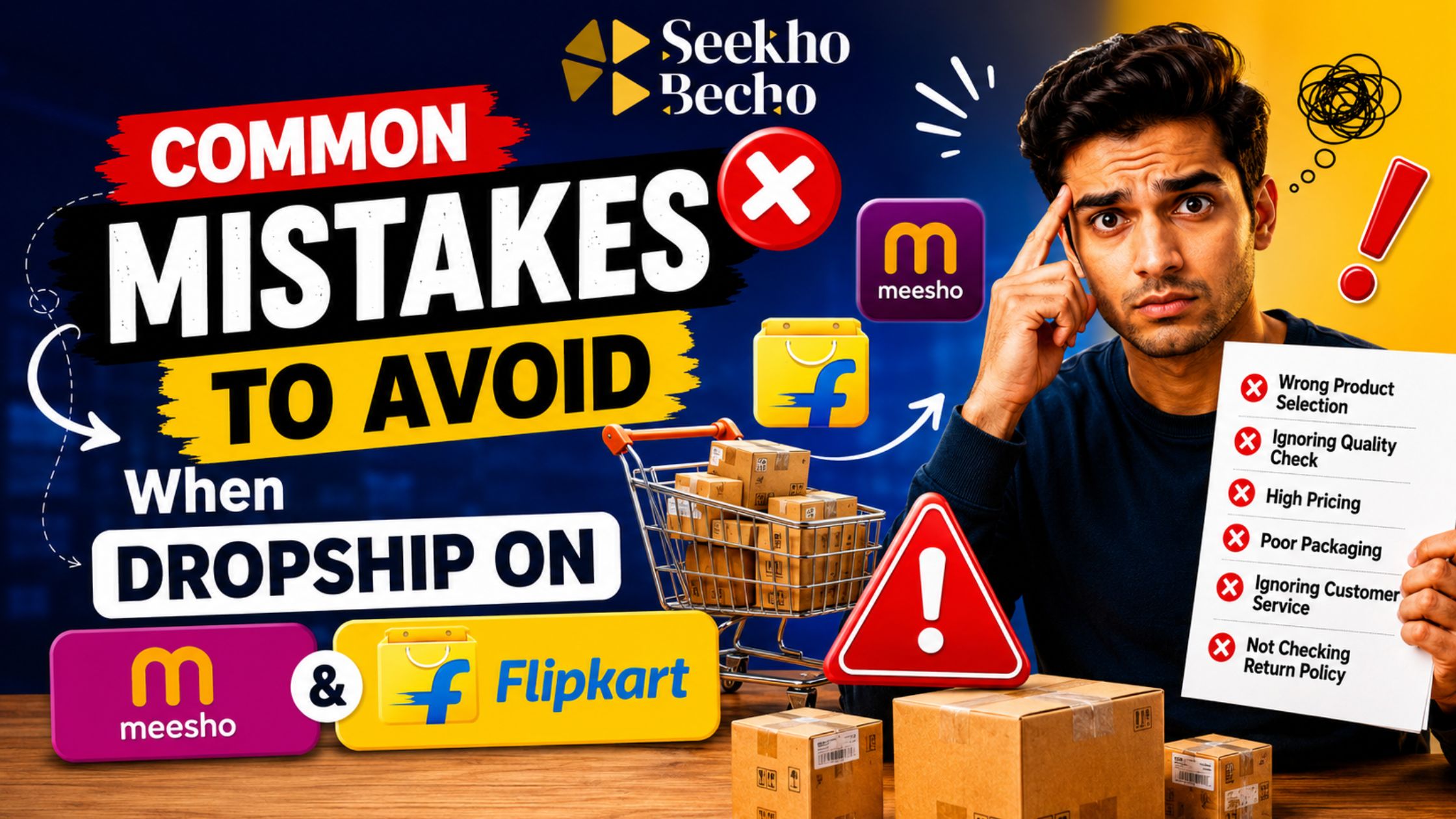
Every day, thousands of new sellers try to dropship on Meesho or dropship on Flipkart – hoping to build a business with little to no upfront investment. But most of them quit within 90 days. Why? Not because the model is broken. Because they make the same avoidable mistakes, over and over again. This guide walks you through the most common dropshipping mistakes Indian sellers make on these platforms – and exactly how to avoid them so your business actually survives and grows.
What Does It Mean to Dropship on Meesho or Flipkart?
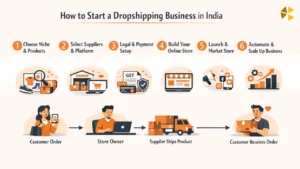
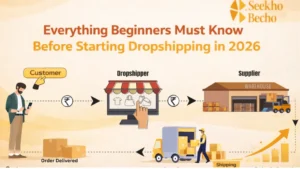
Dropshipping is an ecommerce business model where you sell products online without holding inventory. When a customer places an order, your supplier ships the product directly to them. On platforms like Meesho and Flipkart, you list products, manage orders, and handle customer communication – while your supplier handles storage and shipping. It is one of the most popular low investment business models in India today, especially for first-time online sellers.
Why Do Most Dropshippers Fail on These Platforms?
According to seller community reports and platform data trends, over 60% of new dropshipping sellers on Indian marketplaces give up within three months. The reasons are almost always the same: poor supplier reliability, bad product listing optimization, ignoring return rates, and a total mismatch with platform policies. Most beginners treat dropshipping like a “set it and forget it” business. In reality, it needs constant attention, especially when you are selling on platforms with millions of competing listings.
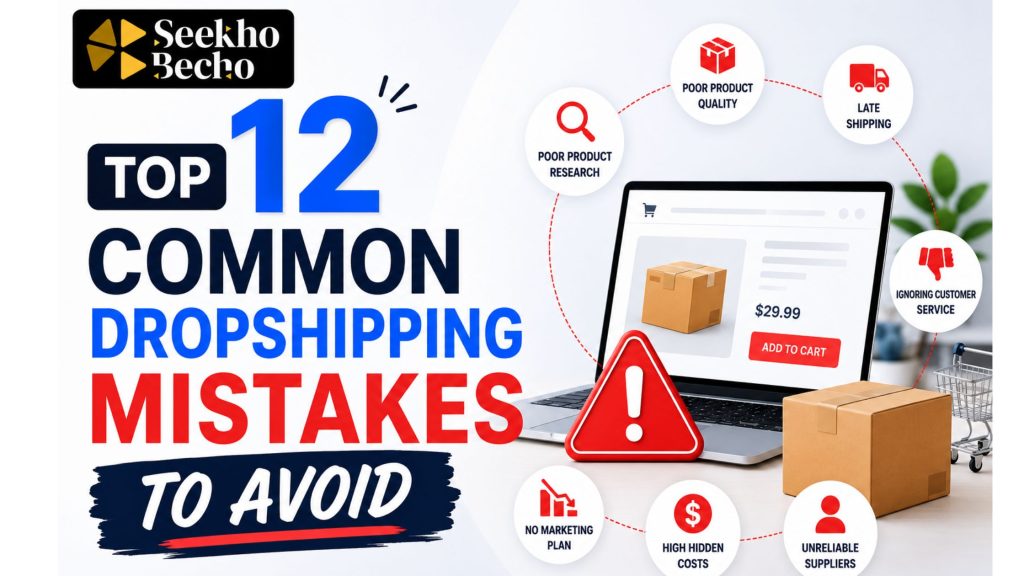
Top 12 Common Dropshipping Mistakes to Avoid
1.) Choosing the Wrong Supplier
Supplier reliability is the foundation of your entire dropshipping business. If your supplier sends damaged products, delays shipments, or suddenly goes out of stock, your seller rating suffers – not theirs.
Many beginners source from random wholesalers on WhatsApp or unverified platforms without verifying quality, shipping timelines, or return policies. This leads to a flood of customer complaints that can permanently damage your account.
- Always order samples before listing any product
- Verify GST registration and return handling policy with your supplier
- Prefer suppliers who have experience with Meesho or Flipkart fulfillment timelines
2.) Ignoring Platform Policies on Meesho and Flipkart
Meesho and Flipkart Dropship both have strict seller policies – and they update them regularly. Violating these rules, even unintentionally, can result in account suspension or listing removal.
Common policy violations include selling items in restricted categories, using competitor brand names in listings, incorrect product categorization, and failing to meet dispatch SLA (Service Level Agreement). Based on platform guidelines, Flipkart requires dispatch within 2 business days for most categories. Missing this consistently will drop your seller score.
- Read and re-read the seller policy documents on both platforms
- Subscribe to seller newsletters or community updates from Meesho and Flipkart
- Never copy a competitor product title that contains brand names you don’t own
3.) Poor Product Listing and Descriptions
Product listing optimization is where most beginners leave money on the table. Blurry images, copy-pasted descriptions, incorrect category tags, and missing keywords make your listing invisible – or worse, flag it for review.
On Meesho, visual content drives most purchase decisions because the buyer base is highly price-sensitive and primarily mobile-first. On Flipkart, detailed specs, accurate category attributes, and keyword-rich titles improve your search rank significantly.
- Use high-resolution images with white or plain backgrounds
- Write unique product descriptions – never copy from your supplier
- Include relevant keywords like product type, material, size, and use case
- Fill all optional attribute fields (color, weight, dimensions) – they affect search filters
4.) Underestimating Return and Refund Rates
Return and refund policy management is one of the biggest hidden costs in dropshipping in India. On platforms like Meesho, return rates for fashion and lifestyle categories can be as high as 25-30%.
When a product is returned, the cost of reverse logistics, potential damage, and re-listing effort can wipe out your margin entirely. And since most dropshippers do not hold inventory, managing returned goods is extra complicated – you will need a clear policy with your supplier about who absorbs this cost.
- Calculate your real profit after factoring in an estimated 15-20% return rate
- Choose product categories with lower return rates – home decor, stationery, daily use items
- Clarify with your supplier whether they accept returned goods and under what conditions
5.) Not Tracking Profit Margins Properly
Profit margin in dropshipping is thinner than most beginners expect. You need to subtract: product cost, platform commission, shipping charges, return logistics, packaging (if applicable), and GST – all before you count your profit.
A product you sell for Rs. 499 may net you Rs. 20 after all deductions if you have not done the math properly. Many dropshippers discover this only after three months of selling.
- Use a margin calculator spreadsheet before listing any product
- On Flipkart, check the commission rate for your specific category – it varies widely
- On Meesho, factor in the logistics fee per shipment, which changes based on weight and zone
6.) Overlooking COD Order Risks
COD orders in India are a double-edged sword. On one hand, they increase conversions because many Indian buyers do not trust prepaid orders. On the other hand, COD return rates are significantly higher – some sellers report 30-40% COD non-delivery or return on Meesho.
When a COD order is returned, you pay for both forward and reverse logistics. If this happens frequently enough, you are literally paying to lose money.
- Monitor your COD return rate monthly
- For high-value products, consider limiting COD or adding a small COD convenience fee (where platform allows)
- Test prepaid conversion with discount coupons – some buyers switch when the deal is right
7.) Ignoring Seller Ratings and Reviews
Seller rating on Meesho and Flipkart directly impacts your listing visibility. A low rating means the algorithm deprioritizes your listings – meaning fewer impressions, fewer clicks, fewer sales. It is a downward spiral.
Most new sellers focus entirely on getting their first few orders and completely ignore the review ecosystem. Customer reviews, especially negative ones, compound quickly if you do not respond and resolve issues.
- Respond to every negative review within 24 hours
- Follow up with buyers after delivery to check satisfaction (use Meesho’s seller communication tools)
- Resolve disputes proactively to avoid escalation to platform level
8.) Copying Competitors Without Research
Copying competitor listings without understanding their strategy is a common dropshipping mistake. Dropship Beginners see a best-selling product and list the exact same item at a slightly lower price – thinking that is all it takes.
What they miss: the competitor may have a lower supplier cost, better seller rating, hundreds of reviews, and a stronger delivery track record. You are entering a fight you are not equipped to win yet.
- Research competitors on the basis of product gap, not just price
- Use Meesho Supplier Panel and Flipkart Seller Hub for category trend data
- Find products with demand but fewer than 50 competing sellers – not the already-saturated ones
9.) No Customer Communication Plan
Customer complaints in dropshipping are inevitable. Products get delayed. Packages arrive damaged. Customers receive wrong sizes. What separates successful sellers from failed ones is how fast and how well they respond.
Ignoring customer queries or relying on automated non-answers is one of the fastest ways to get negative reviews and platform strikes. Based on seller experience, platforms like Flipkart track your response time and use it in seller performance scoring.
- Set up a response template for common queries (delay, wrong product, return request)
- Reply to every message within 24 hours – ideally within 4-6 hours during business days
- Own the problem even when it is the supplier’s fault – the customer bought from you, not your supplier
10.) Trying to Scale Too Fast, Too Soon
Scaling a dropshipping business before you have sorted out your fundamentals is like adding floors to a building with a cracked foundation. Beginners get 10-15 orders a day and immediately try to list 500 more products, add more suppliers, or spend heavily on ads.
This leads to order management chaos, supplier mix-ups, more customer complaints, and a rapid rating drop. Scaling amplifies both your strengths and your weaknesses.
- Aim for consistent, profitable operations with 20-30 daily orders before scaling
- Automate what you can – use tools and platform features for order tracking and reporting
- Add products one supplier at a time – validate reliability before expanding
11.) Ignoring Logistics Partner Performance
Logistics partner performance in India varies significantly by pin code, city tier, and product weight. Meesho uses its own Meesho Supply Chain (formerly Valmo) while Flipkart uses Ekart Logistics as its primary logistics arm. Both have zone-based pricing and varying delivery SLAs.
Sellers who do not monitor delivery timelines by region often get blindsided by delays in Tier 3 cities, which then drive up customer complaints and returns.
- Check your logistics dashboard weekly – look for regions with consistently late deliveries
- Avoid launching new products in problematic pin codes until your logistics performance stabilizes
12.) Skipping Product Research and Trend Validation
Product sourcing in India needs to be based on data, not gut feeling. Many beginners list products they personally like or products they saw going viral on Instagram, without checking actual demand on Meesho or Flipkart.
Trending on social media does not always mean it will sell on a marketplace. Marketplace buyers have different intent, price expectations, and purchase behavior.
- Use Meesho’s trending categories section before picking products
- Check Flipkart’s search suggestions and best-seller lists in your target category
- Validate demand with a small test batch of 5-10 listings before going all-in
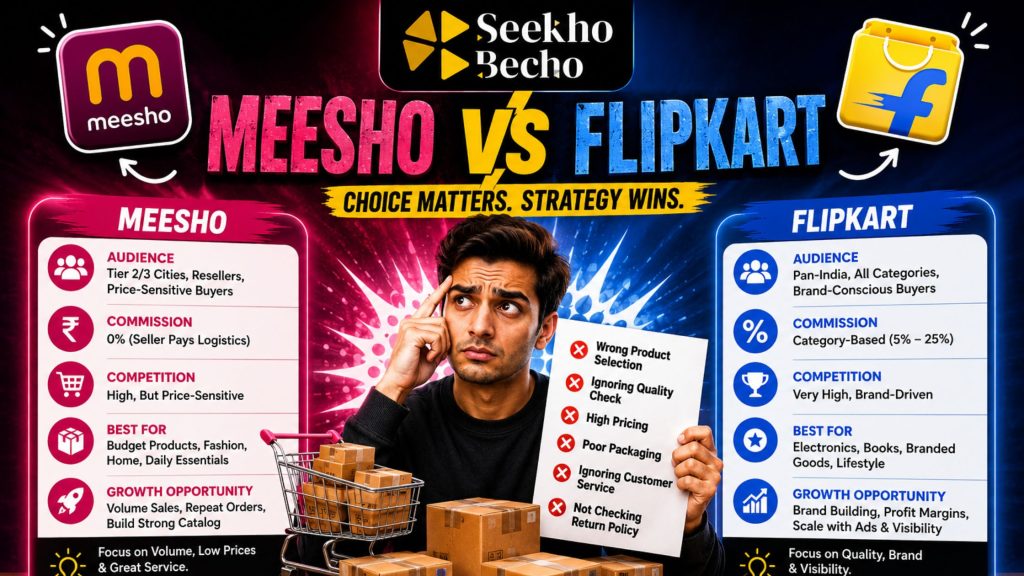
Meesho vs Flipkart: Platform-Specific Mistakes to Watch
Both platforms have unique dynamics. What works on Meesho may not translate to Flipkart. Here is a quick comparison to help you make smarter platform decisions:
Factor | Meesho | Flipkart |
Audience | Tier 2/3 cities, resellers | Pan-India, all categories |
Commission | 0% (seller pays logistics) | Category-based (5–25%) |
Returns | High (fashion/lifestyle heavy) | Moderate (policy enforced) |
COD Risk | Very high (informal buyers) | Moderate |
Competition | High but price-sensitive | Very high, brand-heavy |
Best For | Budget products, fashion, home | Electronics, books, branded goods |
Beginner Ease | Easier to start | Steeper learning curve |
For online selling in India beginners, Meesho is generally more forgiving in terms of entry barriers. But Flipkart offers better visibility for quality sellers who maintain high ratings and fast dispatch. Your ideal strategy depends on your product category, target audience, and supplier capabilities.
Quick Checklist Before You Start Dropshipping
Before you list your first product, run through this checklist:
Supplier verified – sample ordered and tested
Platform policies read and understood for your category
Profit margin calculated after all deductions (commission, logistics, GST, returns)
Product listing ready – original images, unique description, correct attributes
COD strategy decided – enabled, disabled, or restricted by product value
Customer response templates prepared
Seller account fully set up – bank details, GST, business info
Return policy synced with supplier – clear on who handles returns and cost
Logistics coverage checked for your key target cities
Scaling plan written – at what order volume will you add new products/suppliers?
FAQs
Q: Is dropshipping allowed on Meesho?
Yes, dropshipping is allowed on Meesho. You can list products and have your supplier ship directly to the buyer. However, you must register as a supplier on Meesho and comply with all platform policies, including dispatch timelines, return policies, and listing guidelines. You are fully responsible for order fulfillment as the registered seller.nz
Q: What is the biggest mistake in dropshipping?
The biggest dropshipping mistake is choosing an unreliable supplier. Poor product quality, delayed shipping, and high return rates all start with a bad supplier relationship. This single mistake affects your seller rating, customer satisfaction, return rates, and profit margins simultaneously. Always verify suppliers with sample orders before going live.
Q: Is Meesho better than Flipkart for dropshipping beginners?
For most beginners in India, Meesho is the easier starting point. It has a lower entry barrier, zero commission model, and a massive Tier 2/3 city buyer base. Flipkart is more competitive, has stricter performance metrics, and works better for sellers with stronger logistics and higher-quality products. Start on Meesho, learn the fundamentals, then expand to Flipkart.
Conclusion
Learning to dropship on Meesho or dropship on Flipkart successfully is not about finding a magic product or hacking the algorithm. It is about avoiding these common, preventable mistakes that sink most beginners before they ever get traction.
Start with one platform. Pick one reliable supplier. List 10 products properly. Manage your margins obsessively. Treat every customer complaint as a learning opportunity. Then – and only then – start thinking about scaling.
The sellers who win in Indian dropshipping are not the ones who move fastest. They are the ones who move smartest. Use this guide as your starting checklist – and revisit it every time you feel the urge to take a shortcut.
🚀 Want to Grow Your Dropshipping Business?: |