Want to sell on Flipkart and start earning online? You’re not alone. Thousands of sellers join Flipkart every month to grow their business and reach customers across India. From small businesses to individual entrepreneurs, Flipkart has become one of the biggest eCommerce marketplaces for online selling.
But many beginners struggle because they don’t understand the registration process, seller fees, product listing optimization, or how the Flipkart marketplace actually works.
In this complete guide, you’ll learn how to sell on Flipkart step by step, including seller registration, required documents, fees, GST rules, product listing tips, and proven strategies to increase sales in 2026.
How to Sell on Flipkart
To sell on Flipkart, you need to create a seller account on Flipkart Seller Hub, submit your business and bank details, upload product listings, and choose a fulfillment method. Once your account is approved, your products go live and customers across India can start placing orders.
Quick Summary
- Flipkart allows businesses and individuals to sell products online
- GST is required for most product categories
- Sellers need PAN card, bank account, and address proof
- Product listing optimization improves visibility and sales
- Flipkart Fulfillment helps with faster shipping and better rankings
- Sellers pay commission, shipping, and fixed fees on every order
Why Sell on Flipkart in 2026?
Flipkart is one of India’s largest online marketplaces with millions of active buyers across Tier 1, Tier 2, and Tier 3 cities. For beginners looking to start an online business, Flipkart provides a strong opportunity to grow without building a website from scratch.
Benefits of Selling on Flipkart
- Access to 450+ million customers
- Strong logistics and delivery network
- Trusted platform among Indian buyers
- Easy seller registration process
- Integrated advertising and promotion tools
- Opportunity to scale quickly across India
If you want to grow your eCommerce business, learning how to sell products on Flipkart is a smart long-term decision.
Also Read: Can You Dropship on Meesho or Flipkart?
What Documents Are Required to Sell on Flipkart?
To create a Flipkart seller account, you need a few basic documents for verification and payments.
- PAN Card
- GSTIN (for most taxable products)
- Bank account details
- Address proof
- Mobile number and email ID
- Signature
Some categories may also require:
- Brand authorization
- Business registration proof
- Cancelled cheque
How to Create a Flipkart Seller Account
The Flipkart seller registration process is simple and can usually be completed within a day.
Step 1: Register on Flipkart Seller Hub
Visit the Flipkart Seller Hub and create your seller account using:
- Mobile number
- Email address
- Business information
Once registered, you’ll get access to the Flipkart seller dashboard where you can manage listings, orders, inventory, and payments.
Step 2: Add Business and Bank Details
Enter accurate business information because all seller payments will be credited to your bank account.
Required Details
- Business name
- Pickup address
- Bank account details
- Tax information
Step 3: Upload Product Listings
Product listings play a major role in whether you succeed or fail on Flipkart.
To improve visibility inside Flipkart search results, optimize your listings with:
- High-quality product images
- SEO-friendly product titles
- Clear product descriptions
- Competitive pricing
- Accurate product specifications
Product Listing Optimization Tips
Use relevant keywords naturally in:
- Product title
- Description
- Bullet points
Example keywords:
- sell on flipkart
- best products on Flipkart
- mobile accessories online
- kitchen products online
Well-optimized listings improve visibility and conversion rates.
Flipkart Fulfillment vs Self-Shipping
Flipkart offers two shipping models for sellers.
1. Flipkart Fulfillment
In Flipkart Fulfillment:
- Flipkart stores your products
- Packaging and shipping are handled by Flipkart
- Faster delivery improves customer experience
- Products often rank better
This option is best for scaling sellers.
2. Self-Shipping
In self-shipping:
- You manage packaging
- You handle logistics and shipping
- More operational control
- Lower fulfillment support
This model is suitable for small sellers or customized products.
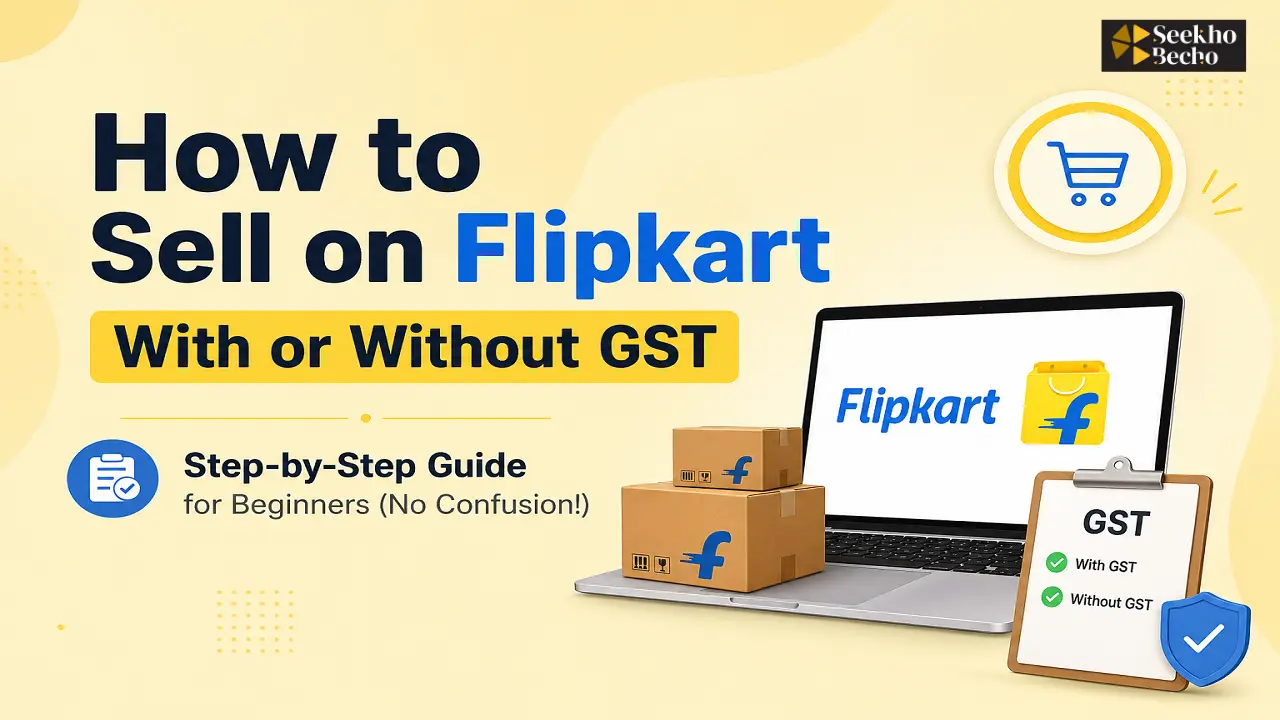
How to Sell on Flipkart Without GST
Many beginners search for ways to sell on Flipkart without GST. While GST is mandatory for most categories, Flipkart allows some exemptions.
1. Choose GST-Exempt Products
Flipkart allows sellers without GST to list only non-taxable categories, such as:
- Books
- Handmade or handicraft items
- Some educational materials
Note: If your product falls under these categories, you can proceed without GST.
2. Register as an Individual Seller
While signing up on Flipkart Seller Hub:
- Select individual seller
- Provide PAN card and bank details
- Skip GST (if your category allows)
3. Upload Products Carefully
- Your product category is GST-exempt
- You select the correct tax classification
- Product details are accurate to avoid rejection
Important Limitations to Sell on Flipkart without GST
- You cannot sell the most popular categories like fashion, electronics, home decor, etc.
- You may face restricted growth opportunities
- Some features and benefits may not be available
Also Read: How to Sell on Meesho Without GST
GST-Exempt Categories
You may sell without GST if your products fall under exempt categories such as:
- Books
- Handmade products
- Handicrafts
- Certain educational materials
How to Register Without GST to Sell on Flipkart
If your category is GST-exempt:
- Register as an individual seller
- Submit PAN card and bank details
- Skip GST details during registration
Important Limitations
Without GST, you cannot sell in many popular categories like:
- Electronics
- Fashion
- Home decor
- Kitchen appliances
Your growth opportunities may also be limited.
Flipkart Seller Fees & Commission Explained
Understanding Flipkart seller fees is important before starting your business.
1. Commission Fee
Flipkart charges a commission depending on the product category.
Typical range: 5% to 25%
2. Fixed Fee
A fixed fee is charged based on product price range.
3. Shipping Fee
Shipping charges depend on:
- Product weight
- Delivery distance
- Fulfillment method
4. Collection Fee
Payment gateway and collection charges are usually around 2%.
Example of Flipkart Seller Charges
If you sell a product for ₹1000:
| Charges | Amount |
| Commission | ₹150 |
| Shipping Fee | ₹80 |
| Fixed Fee | ₹40 |
| Total Charges | ₹270 |
| Remaining Amount | ₹730 |
This amount does not include product cost or advertising expenses.
Best Products to Sell on Flipkart in 2026
Choosing the right product category is one of the biggest success factors.
High-Demand Products on Flipkart
- Mobile accessories
- Fashion products
- Kitchen tools
- Beauty products
- Home storage items
- Fitness accessories
- Smart gadgets
- Daily utility products
Focus on:
- High demand
- Low competition
- Good profit margins
Common Mistakes New Flipkart Sellers Make
Many sellers fail because they ignore important marketplace factors.
- Poor product images
- Wrong pricing strategy
- Low inventory management
- Delayed shipping
- Weak customer support
- Ignoring SEO in product listings
Avoiding these mistakes can improve seller ratings and increase visibility.
How to Increase Sales on Flipkart
Success on Flipkart depends on optimization and consistency.
1. Optimize Product Listings
Use keyword-rich titles and descriptions.
2. Invest in Better Images
Professional images improve conversions significantly.
3. Maintain Seller Ratings
Focus on:
- Fast shipping
- Good packaging
- Quick customer support
4. Run Flipkart Ads Strategically
Flipkart Ads can help improve:
- Product visibility
- Ranking
- Sales
Start with small budgets and scale based on ROI.
Challenges Flipkart Sellers Face
While Flipkart offers strong growth opportunities, sellers also face challenges such as:
- High competition
- Product returns
- Pricing pressure
- Account penalties
- Increasing advertising costs
Understanding these challenges helps you build a sustainable long-term business.
Flipkart vs Amazon for Sellers
| Feature | Flipkart | Amazon |
| Marketplace Focus | India | Global |
| Competition | Medium | High |
| Logistics | Ekart | FBA |
| Best For | Indian sellers | Large-scale expansion |
| Seller Entry | Easier | Moderate |
For beginners targeting Indian customers, Flipkart is often easier to start with.
Frequently Asked Questions
How can I sell my products on Flipkart?
To sell products on Flipkart, create a seller account on Flipkart Seller Hub, upload your product listings, choose a fulfillment method, and start receiving customer orders after approval.
How much does Flipkart charge sellers?
Flipkart charges commission fees, fixed fees, shipping charges, and collection fees. Total charges usually range between 15% and 30% depending on the product category.
Can I sell on Flipkart without GST?
Yes, but only for GST-exempt categories like books, handicrafts, and certain handmade products.
Is selling on Flipkart profitable?
Yes, selling on Flipkart can be profitable if you choose the right products, optimize listings, manage costs properly, and maintain good seller ratings.
Can individuals sell on Flipkart?
Yes, individuals can register as sellers on Flipkart using PAN card, bank account details, and other required documents.
Which products sell most on Flipkart?
Popular categories include mobile accessories, fashion products, beauty products, home essentials, and kitchen items.
How long does Flipkart seller approval take?
In most cases, Flipkart seller account approval takes between 24 to 72 hours after successful document verification.
Final Thoughts
Selling on Flipkart is a great opportunity for anyone looking to start or scale an online business in India. With its wide customer reach, strong logistics network, and trusted brand value, Flipkart makes it easier for sellers to enter the eCommerce space. However, success doesn’t come automatically. You need the right product selection, competitive pricing, optimized listings, and a clear understanding of costs.
If you’re just starting, focus on learning how to sell on Flipkart step by step, keep your operations simple, and gradually scale as you gain experience. With the right strategy and consistency, Flipkart can become a reliable and profitable sales channel for your business.